


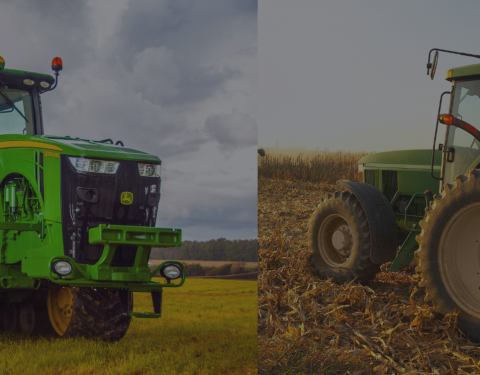
Tracks vs Tires in Agriculture: Performance, Efficiency, and the Right Choice for Your Operation
For years, operators have debated which system performs better. The truth is, there isn’t a universal winner. Both tracks and tires bring distinct advantages, and the best option depends on how, where, and how often your equipment is used.
Equipment size, soil conditions, terrain variability, and operational goals all play a key role in determining the most efficient setup. Today, the conversation has shifted from “which is better” to “which is better for your operation.”
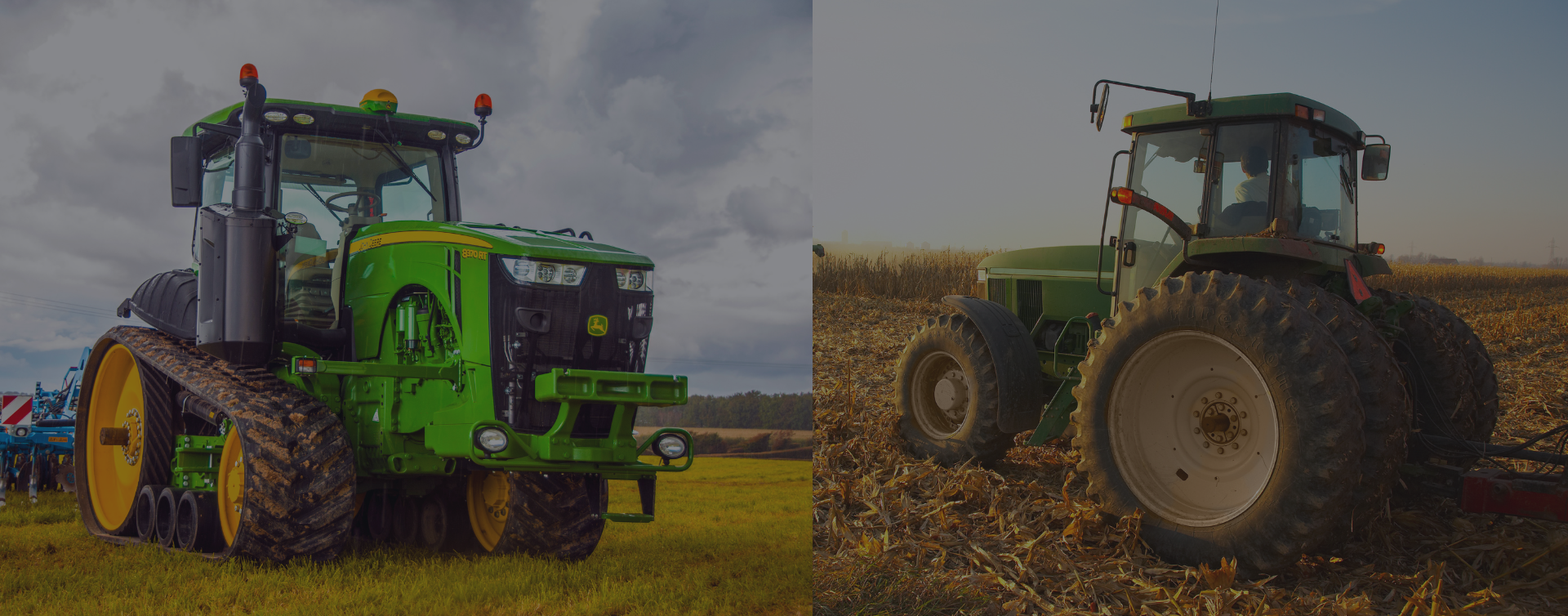
Rubber tracks are part of a fully engineered undercarriage system designed primarily for high-horsepower, high-weight machines operating in demanding conditions. Their larger footprint allows them to distribute weight across a broader surface, which can improve flotation and maintain productivity in soft or wet soils.
They also provide consistent traction on uneven terrain and can deliver a smoother ride when operating across rough field conditions. This makes them especially valuable in situations where maintaining momentum is critical, such as wet harvests or heavy draft applications.
However, while tracks increase surface area, they do not eliminate ground pressure entirely. Load distribution across the track is not perfectly uniform, and heavier equipment can still lead to deeper soil compaction.
In real-world use, rubber tracks perform best when conditions become limiting factors. This includes:
- Fields with high moisture content and low soil bearing capacity
- Operations requiring maximum traction and minimal slip
- Heavy equipment applications with high axle loads
- Situations where timing is critical, and delays due to soil conditions are not an option
In these environments, tracks allow operators to continue working when wheeled equipment may struggle to maintain traction or mobility.
At the same time, modern agricultural tires have evolved significantly, and this is where the conversation becomes more interesting. Today’s VF (Very High Flexion) tires, combined with inflation management systems, allow operators to adjust tire pressure based on load and terrain, effectively increasing the footprint and reducing ground pressure in the field.
This means tires can now deliver levels of traction and soil protection that were historically associated only with tracks, while maintaining their traditional advantages.
Tires remain the most versatile solution in agriculture today. They are better suited for operations that require frequent transitions between fieldwork and road transport, offering higher speeds, lower fuel consumption, and reduced wear. Their ability to adapt, through tread design, inflation pressure, and configuration, allows them to perform efficiently across a wider range of conditions.
When properly managed, tires can also minimize soil compaction. In fact, studies show that properly inflated tires can match or even outperform tracks in terms of ground pressure under certain conditions.
Additionally, tires generally involve lower upfront investment and reduced maintenance complexity, making them a more cost-effective option for many operations.
From an operational perspective, the difference between tracks and tires comes down to how each system interacts with the soil. Tracks rely on a longer contact patch to push the machine forward, which reduces slip in soft terrain. Tires, on the other hand, generate traction through controlled slip and soil engagement, but can be optimized through inflation pressure and load management to improve efficiency. This is why no single system dominates across all environments.
Rubber tracks are not a replacement for tires, they are a specialized solution. They excel when machines are operating under constant heavy loads, in unstable soil, or in conditions where traction is the limiting factor. Tires, on the other hand, provide the flexibility and efficiency needed for mixed-use operations, where conditions change daily and transport plays a critical role.
Sedam Insight: What Should You Choose?
The right choice comes down to three questions:
- What conditions do you operate in most often?
- How important is mobility and transport efficiency?
- What is your true cost of operation?
For many modern operations, especially those balancing fieldwork and logistics, advanced tire technology offers the best overall return. But in extreme conditions, wet fields, heavy loads, and time-sensitive operations, tracks can provide the performance edge needed to keep moving.
For additional information about tires and rubber tracks, contact us: