

PERRY, N.Y. — Taking the reins of a family-owned tire dealership that has been thriving since 1926 could be a formidable undertaking. It could be even more daunting if the new owner had never worked in the tire industry. Yet Greg Byrnes, who purchased Sedam Tire in rural Perry 12 years ago, after a career in commercial real estate in Washington, D.C., turned the situation into a learning experience.
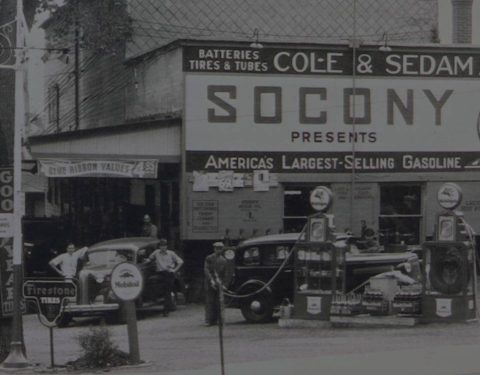
The farm/commercial/retail tire dealership was founded by W. Glenn Sedam in 1926 and was led over the years by three generations of his family. In December 2014 the third generation wanted to retire but had no successors; Byrnes and his wife wanted to move from the big city to a small community to raise their two sons. Byrnes, 52, joked that while some people during a midlife crisis get divorced or buy an exotic car, he got into the tire business. He wanted to work for himself and the dealership was a necessity-based business with a large customer base.

Sedam Tire, which was very successful when he bought it, “had a great name, had a good following, a great customer base,” Byrnes said. “So, it was like a good time. A good time for them to retire. It was good timing for me. When I was going out and driving Western New York, so many people know the name and know Glenn Sedam, who started the business and was very, very well-known, very successful, hardworking,” Byrnes said. He had considered changing the dealership’s name but decided to stick with the enduring name recognition. I felt like if I changed the name, it would be a distraction for the business, so I left it alone.”
Learning experience
Byrnes also refrained from making changes to the operations when he first took over. Instead, he focused on learning the different jobs in the dealership and taking notes about ideas for improvement.
“The first thing I did was I sat in the retail office and I was a retail salesman, doing service, selling tires. And I didn’t change anything for the first year. I just absorbed all the information and figured out what I needed to learn, and I’d write a little notebook on stuff I wanted to change. I just kind of learned from all the employees, from the customers, from fellow tire people, and just tried to be a sponge for the first three to five years,” Byrnes said.
“And I did almost every job. I’ve been a delivery guy. Went out and did sales. I didn’t do our commercial service truck, just because insurance wouldn’t let me. But I did every job to kind of understand the perspective that each employee dealt with or their challenges.”
He said he wanted to understand how the tire business operated and what employees experienced in their jobs.
“I wanted to understand, like, how do my guys get treated? What are the challenges they have? What are some things that I can understand and help them out with? They say you got to walk a month in a man’s shoes. I did that for each position because I didn’t grow up in the business. So, you ask for respect, you kind of have to earn it, especially in a position where you’re going to be the leader. You have to know each employee, like, what they’re dealing with, what the day is like. So, it was very, very humbling. Very humbling.”
Looking back, Byrnes said learning about the tire business has been “a great experience. But it’s not for the faint of heart.”
“There’s more to it than people would expect. And, you know, I’ve always tried to be like the product knowledge expert. … There’s a great amount of information. You got to do the work, you got to understand what you’re doing, and if you embrace the complexity, because we do all different product offerings, it’s way more enjoyable. There’s more complexity to it, and there’s more specialization. I didn’t know what I didn’t know. And then after a couple years, I look back, I learned a lot. And then when I did that five-year span, … that’s a lot of knowledge I know now. So, instead of just selling tires to customers, we try to consult with them, understand their needs, do those different things,” he said.
Byrnes said other dealers in the industry have helped him with advice and insights.
“I got involved in dealer councils. I got involved in other groups where they’re trying to understand what we dealers are dealing with. I learned a lot from those meetings, from other dealers. So, I think in my experience, I was very blessed that I had all that. It would’ve went a lot harder if I was just out on my own, but I had a lot of support from the industry. And I can’t express that enough. I wouldn’t have been anywhere without all the other dealers that I’ve known and interacted with, and I’m very appreciative of that. This would have been a lot harder on my own, but that makes sense, and the people in our industry are just super generous, very thoughtful.
“… I’ve gotten a lot of support and a lot of help from other people. You got to do the work, but there are people that gave me advice and gave me different insight that made the learning a lot easier. So, that is a very positive thing for our industry.”
Employee morale
He said his learning experience helped him understand how to help improve the jobs of his 28 employees. For example, when it came time to order a service truck, he rented several different models and asked the employees to provide feedback.
Employee feedback also prompted him to start holding monthly staff meetings to give updates on the business.
Byrnes still walks around the three buildings on the dealership’s five-acre property and helps employees on various jobs.
“A lot of times I can learn a lot from just going out there and spending a couple hours with the guys, you know, like, ‘How’s it going?’ I don’t think I’m unique in that. I think the owners that I am friends with, … they’re all the same way. They roll their sleeves up if things need to get done. They help out.
“That’s one thing that I’ll say, coming from kind of a corporate environment to this. It’s very hands-on and the successful, good owners, they roll their sleeves up and help out and do things. So, yes, I think it helps out morale.”
Adapting to trends
After his initial learning curve, Byrnes made some changes to the operations, some forced by trends in the market.
Farm tires and service make up about 60% of the dealership’s dollar sales, with automotive retail accounting for about 15% and wholesale to other area dealerships rounding out the balance.
The dealership used to have a much larger presence in wholesale, but Byrnes said there is now a proliferation of national distributors buying other wholesalers.
However, the dealership is expanding into selling and servicing OTR tires for local underground salt mines.
“We’ve been doing more of the off-the-road because it complements our farm business — similar trucks, similar training, similar safety aspects. So, it’s something we’re doing to expand our footprint.”
Byrnes also has upgraded and modernized the dealership’s technology to communicate with customers and in-the-field staff.
“For some of our customers, they’re out on a tractor, so it’s a heavy machinery. It’s just easy to text us. Being able to go on and log in and ask for an appointment seems very basic. We didn’t have any of that capability before. So, it’s really trying to meet the customer with what their expectations are,” he said.
A year ago, the dealership joined the Independent Tire Dealers Group (ITDG) to secure the buying group’s discounted pricing and benefits.
“We work direct with a bunch of different manufacturers, but we had some, I would say gaps, in our offerings. … So, it made sense for us, long-term, to join and it’s been a great experience. It’s really helped out,” he said.
“When you’re out on your own and you’re a small independent, it can be very challenging. So, that was the thing that was nice about it. I looked at it the same way I did as the PEO (Professional Employer Organization) that gave my employees a way better level of benefits and services.”
Attracting talent
One of Sedam Tire’s challenges, like most in the tire service industry, is the shortage of experienced technicians.
Byrnes said to address the issue, he visits the local career and technical school, the Genesee Valley BOCES (Board of Cooperative Educational Services), which offers automotive training.
“I felt like we’re complaining about not having good help. Here’s a local high school that’s training kids. … So, instead of complaining about not having a good pipeline of students, why don’t I go over there and do mock interviews, talk to the kids, engage with them, show them what the next step would be if they left high school and got into the industry?
“We’ve done job shadows. We’ve done internships. That’s how I think about things. It’s like being part of the solution. It’s easy to complain about the problems, but we do need to change and think about how we can make it more attractive,” Byrnes said.
When he first bought the dealership, the staff had an age gap between older employees and younger employees.
“And now, 12 years later, I think we’ve done a nice job of kind of having a good cross-section of ages, of experiences. We do some mentoring. It’s always a challenge, but I don’t know what the secret is. We just try to get a good mix of it, but it depends on what you get for applicants,” Byrnes said.
To attract, and retain, employees, the dealership joined a PEO, an outsourcing firm that provides employee benefits to small- and mid-sized businesses, including a 401K retirement fund and supplemental benefits. Employees are vested in the 401K on the first day, he said.
“So, my counterparts think I’m crazy, but it’s like, hey, we’re investing in your future today. … We got to do something to show that we’re thinking about them long-term. So, I think it’s a good benefit,” Byrnes said, adding, “It has made us much more competitive with other employers.”
In sharing his business experiences with BOCES students, Byrnes said he has warned them they will make mistakes along the way.
“I said, ‘Listen, go out there, do stuff, make mistakes, learn from your mistakes. Make some more mistakes, learn from those mistakes, and then you’ll have experience. But you can’t have experience without any of that stuff.’”